Please see below for a discussion of the Osterweis Opportunity Fund’s recent performance and our near-to-medium term market outlook.
Performance (as of September 30, 2026)
| QTR | 1 Year | 3 Year | 5 Year | 10 Year | Since Inception (10/1/2012) | |
|---|---|---|---|---|---|---|
| OSTGX | -8.98 | 22.39 | 17.72 | 3.62 | 14.36 | 13.99 |
| Russell 2000 Growth Index | -9.39 | 12.05 | 17.55 | 4.72 | 9.90 | 10.66 |
All figures in this table reflect percentages. Periods longer than one year are annualized.
Performance data quoted represent past performance; past performance does not guarantee future results. The investment return and principal value of an investment will fluctuate so that an investor’s shares, when redeemed, may be worth more or less than their original cost. Current performance of the Fund may be higher or lower than the performance quoted. Performance data current to the most recent month end may be obtained by calling (866) 236-0050. Gross/Net expense ratio as of March 31, 2026: 1.22% / 1.12%. The Adviser has contractually agreed to waive certain fees through June 30, 2027. The net expense ratio is applicable to investors. See additional disclosures at the end of the letter.
Market Recap
Sentiment was mostly bearish in the third quarter, particularly in the small cap market. The S&P 500 Index generated a modest return of 2.30%, but many other equity indices produced negative results, including our benchmark, the Russell 2000 Growth Index, which declined 9.39%. Our Opportunity Fund also fell 8.98%, but it was still slightly ahead of the index, largely due to our overweight to cash. Over the trailing twelve months, the fund significantly outperformed, delivering 22.39% versus 12.05% for the index.
Conditions for small caps in the third quarter were challenging, as macro factors were generally more impactful than company-specific fundamentals. In particular, concerns about AI buildout risks and elevated interest rates caused several of our standout performers from the second quarter to deliver negative returns.
Portfolio Attribution
Security Selection
Security selection was additive to our relative performance this quarter. Our holdings in our two largest sectors by weight, Health Care and Information Technology, substantially outperformed their index counterparts. In fact, our Health Care investments overall achieved gains while the index sector recorded a loss. On the other hand, our Industrial and Consumer Discretionary holdings lagged their counterparts but not by enough to offset the other two sectors.
The largest contributor in the portfolio during the quarter came from Health Care. AtriCure, a medical device maker focused on atrial fibrillation (AFib) treatments and open-heart surgery, had strong Q2 results driven by continued penetration of its products combined with significant operating leverage. The stock also benefited from new clinical practice guidelines published by the Society of Thoracic Surgeons that will benchmark hospitals against one another for their treatment of AFib. This, along with possible label expansion, could lead to accelerating adoption in 2027. While we are happy with the performance and remain invested, we think shares may take a breather as a major competitor launches a new product this quarter. Our research suggests it will have minimal impact, but it is likely to weaken sentiment.
One of our biggest detractors in the quarter also came from Health Care. Alignment Heath, an innovative player in Medicare Advantage, had a tough quarter as costs plagued Q2 results, and there is speculation that the company may lose its Medicare 4-star rating in California, a key market. Medicare stars allow insurers to receive bonus payments if they adhere to certain quality standards, and industry insiders are suggesting the criteria may be changing this year. Additionally, management sounded less optimistic than usual during a recent conference appearance, so we have cut the position significantly. The new Medicare ratings should be released soon, and we may rebuild the position if the results are favorable.
Our biggest contributor within Information Technology was Twilio, a leading cloud communications platform that enables businesses to engage customers through messaging, voice, email, and digital channels. Shares advanced during the quarter as investors gained confidence in the company's execution, improving growth profile (17% organic growth, including >20% growth in voice revenue), and potential role in enabling AI-driven customer interactions. More recently, the launch of Meta's Muse consumer agent highlighted the potential for agentic software to increase the volume of messaging and voice communications conducted over Twilio's platform. Twilio is well positioned to benefit in both messaging and voice if AI agents drive a meaningful increase in engagement activity across digital channels.
Our second-biggest contributor in IT was Rubrik, which provides cyber resilience and data security software that helps enterprises protect, recover, and secure data across cloud and on-premises environments. The stock performed well as the company delivered strong revenue growth (>30% subscription annual recurring revenue) due to increasing customer adoption of its security offerings. We believe Rubrik remains well positioned to benefit from rising cybersecurity threats and the growing importance of securing data for AI applications and defense against rogue AI agents, as highlighted by the recent OpenAI-Hugging Face incident.
Offsetting some of these gains was MACOM Technology Solutions, which develops high-performance analog and mixed-signal semiconductor products used in communication, industrial, aerospace, and defense applications. Shares declined amid investor concerns regarding the AI infrastructure buildout. We trimmed the position but continue to believe MACOM will benefit from increasing optical networking bandwidth requirements and expanding semiconductor content across data center, defense, and space markets over the long term.
Industrials was our third largest sector by weight and the biggest drag on relative performance. Transcat, a provider of calibration services for high-end equipment, was our biggest contributor to relative performance in the sector, but it still delivered slightly negative absolute returns. The company had a solid quarter driven by favorable Q2 results where organic growth accelerated to 13% vs. 8% in Q1. It has been gaining market share and is benefiting from a recovery after a difficult 2025. The new CEO is executing well, and we like that this is an under-the-radar, bottom-up story not affected by cyclical industrial activity or AI sentiment.
Our biggest detractor in the sector was Cardinal Infrastructure Group. After a very strong first half of the year, the stock sold off as investors became concerned about a potential slowdown in AI infrastructure spending. Enthusiasm declined further after the company reported strong revenue growth but weaker-than-expected margins, driven by unfavorable weather and execution issues in Charlotte, one of its newer markets. We think investors overreacted to what are largely temporary problems, and we remain excited about the longer-term opportunity for Cardinal to continue taking share and expanding into new markets.
Our Consumer Discretionary holdings were a modest drag on our relative performance, but similar to Industrials, the largest contributor to relative performance, Life Time Group, delivered negative absolute returns. The company continued to do what it has done consistently for several years: execute. Membership trends remained healthy, same-store sales growth was strong, and management continued to drive expansion through a combination of higher utilization, pricing, and premium offerings. More than 70% of revenue comes from recurring membership subscriptions, creating a stable foundation, while the company still has a substantial opportunity to expand its club base across the country. With a proven management team and a long growth runway ahead, we believe Life Time remains one of the highest-quality businesses in our portfolio.
Dutch Bros, the drive-through coffee chain, was the biggest detractor within our Consumer Discretionary holdings. The stock gave back some of its earlier gains after management issued conservative guidance and investors became increasingly worried about the consumer backdrop, higher fuel prices, rising interest rates, and competition. While these concerns have weighed on sentiment, the underlying business continues to perform well, with strong comparable store sales and continued success opening new shops. In our view, the market is focused too heavily on the next few quarters and not enough on the larger opportunity ahead. Dutch Bros remains in the early innings of expanding its footprint nationally, and we believe its unique brand, loyal customer base, and attractive unit economics position the company for many years of growth.
Sector Allocation
Sector allocation hurt our relative performance in the third quarter. Both our overweight to Industrials and lack of exposure to Energy detracted from our returns versus the index. Our zero weight in Materials and our overweight to Information Technology were slightly additive but the impact was fairly minor.
Portfolio Positioning & Outlook
During the third quarter, we began repositioning both our Health Care and Information Technology holdings, which we believe contributed to their strong relative performance.
Within Health Care, we started taking profits from a selection of our life sciences positions where valuations have become stretched and future upside limited. We have been redeploying the proceeds into medical devices, which are executing well but being held down due to an overly negative narrative around health care utilization.
In Information Technology, we began reducing our exposure to semiconductor and AI infrastructure companies, which we view as Phase I beneficiaries of AI adoption. Instead, we increased investments in Phase II companies that stand to benefit from the growing deployment of AI applications (as discussed in both a recent webinar and blog post).
Our near-to-medium-term outlook remains constructive. Roughly half of all small cap companies reported earnings growth above 20% in the third quarter, while valuations have become increasingly attractive relative to large caps. Furthermore, while the strong earnings growth of the S&P 500 is frequently highlighted, we believe investors may be overlooking the substantial capital investment that, due to accounting rules, only has a negligible impact on near-term earnings. Hyperscalers continue to invest heavily in data center infrastructure, limiting free cash flow generation and supporting growth across other parts of the market, particularly semiconductors. As a result, the recent preference for large caps over small caps may prove less durable than current sentiment suggests.
While we continue to monitor the interest rate environment, we believe the recent increase remains manageable and that the broader economy is healthy. Against this backdrop, we remain focused on identifying innovative, secular growth companies trading at attractive valuations, an approach we believe is well positioned to compound value over the long term.
In other updates, we would like to share that Jim Callinan will transition to the role of Senior Advisor at the beginning of 2027. In his new position, he will remain actively involved with both the team and the investment process, but he will step back from day-to-day management responsibilities for the fund. At that time, Matt Unger will join Bryan Wong as Co-CIO of the strategy, reflecting the leadership role he has played in managing the portfolio for many years. This transition is part of a thoughtful succession plan designed to ensure continuity for our clients and the strategy.
We thank you for your continued confidence in our management.
James Callinan, CFA
Co-CIO – Small Cap Growth & Portfolio Manager
Bryan Wong, CFA
Co-CIO – Small Cap Growth & Portfolio Manager
Featuring


James Callinan, CFA
Co-CIO – Small Cap Growth & Portfolio Manager
Jim Callinan, a partner at Osterweis, is a Portfolio Manager for the small cap growth strategy. Throughout his career he has focused on investing in companies that are early in their growth cycles. This experience has been the foundation of our high conviction, valuation-aware approach to investing in small cap growth companies.
Prior to Osterweis, Jim was the Co-Founder & Chief Investment Officer at RS Investments. He also founded the RS Growth Group LLC in 1996 and managed the RS Emerging Growth Fund from 1996 until 2010. In 1999 Jim was named Morningstar’s Domestic Stock Manager of the Year.*
Jim served as portfolio manager for the Putnam OTC Emerging Growth Fund from 1994 to 1996 and began his career at Putnam Investments as an equity research analyst in 1987. He joined Osterweis in 2016 and brought with him the Emerging Growth Partners, LP, a concentrated small cap growth strategy he founded at RS in 2006.
Jim graduated from Harvard College with a B.A. in Economics, New York University with an M.S. in Accounting, and Harvard Business School with an M.B.A. He holds the CFA designation and is a member of the Weatherbie Capital Advisory Board. Outside of work, Jim enjoys spending time with his family, travelling, and golfing.
*Morningstar Managers of the Year are determined by a combination of qualitative research by Morningstar’s manager research analysts; risk-adjusted medium- to long-term performance track records; and performance in the calendar year.
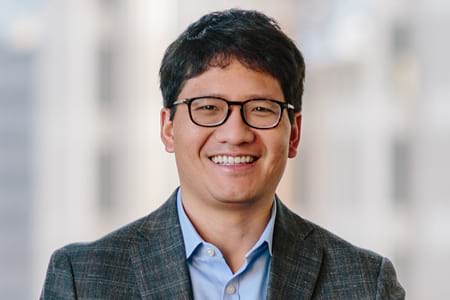

Bryan Wong, CFA
Co-CIO – Small Cap Growth & Portfolio Manager
Bryan Wong, a partner at Osterweis, is a Portfolio Manager for the small cap growth strategy. He is passionate about identifying overlooked opportunities with the potential to deliver strong, sustainable performance, helping clients achieve their long-term investment objectives. Bryan particularly enjoys investing in small companies, where the dynamic nature of the market provides fundamental investors the ability to gain a distinct edge through rigorous research and analysis.
Prior to joining Osterweis Capital Management in 2014, Bryan was a member of the investment team managing the endowment of the David and Lucile Packard Foundation. Before that, he was an Analyst at Wohl Capital Management, a long/short hedge fund.
Bryan graduated from Yale University with a B.A. in Political Science and International Studies with distinction and from the University of California Berkeley, Haas School of Business, with an M.B.A., where he was an Investment Management Fellow. He holds the CFA designation and is a member of the CFA Society of San Francisco. Bryan also serves on the investment committee of the Asian Pacific Fund. Outside of work, he enjoys spending time with family and swimming.
For more information about this strategy, please send us an email or call us at (800) 700-3316.
Related Insights
This commentary contains the current opinions of the authors as of the date above, which are subject to change at any time, are not guaranteed, and should not be considered investment advice. This commentary has been distributed for informational purposes only and is not a recommendation or offer of any particular security, strategy, or investment product. Information contained herein has been obtained from sources believed to be reliable but is not guaranteed.
Performance prior to December 1, 2016 is that of another investment vehicle (the “Predecessor Fund”) before the commencement of the Fund’s operations. The Predecessor Fund was converted into the Fund on November 30, 2016. The Predecessor Fund’s performance shown includes the deduction of the Predecessor Fund’s actual operating expenses. In addition, the Predecessor Fund’s performance shown has been recalculated using the management fee that applies to the Fund, which has the effect of reducing the Predecessor Fund’s performance. The Predecessor Fund was not a registered mutual fund and so was not subject to the same operating expenses or investment and tax restrictions as the Fund. If it had been, the Predecessor Fund’s performance may have been lower.
The Osterweis Funds are available by prospectus only. The Funds’ investment objectives, risks, charges, and expenses must be considered carefully before investing. The summary and statutory prospectuses contain this and other important information about the Funds. You may obtain a summary or statutory prospectus by calling toll free at (866) 236-0050, or by visiting www.osterweis.com/statpro. Please read the prospectus carefully before investing to ensure the Fund is appropriate for your goals and risk tolerance.
Mutual fund investing involves risk. Principal loss is possible. The Osterweis Opportunity Fund may invest in unseasoned companies, which involve additional risks such as abrupt or erratic price movements. The Fund may invest in small and mid-sized companies, which may involve greater volatility than large-sized companies. The Fund may invest in IPOs and unseasoned companies that are in the early stages of their development and may pose more risk compared to more established companies. Higher turnover rates may result in increased transaction costs, which could impact performance. From time to time, the Fund may have concentrated positions in one or more sectors subjecting the Fund to sector emphasis risk. The Fund may invest in foreign and emerging market securities, which involve greater volatility and political, economic and currency risks and differences in accounting methods. These risks may increase for emerging markets.
The Russell 2000 Growth Index (Russell 2000G) is a market-capitalization-weighted index representing the small cap growth segment of U.S. equities. This index does not incur expenses and is not available for investment. This index includes reinvestment of dividends and/or interest.
The S&P 500 Index is widely regarded as the standard for measuring large cap U.S. stock market performance. The index does not incur expenses, is not available for investment, and includes the reinvestment of dividends. This index does not incur expenses and is not available for investment. This index includes reinvestment of dividends and/or interest.
Free cash flow represents the cash that a company is able to generate after laying out the money required to maintain and expand the company’s asset base. Free cash flow is important because it allows a company to pursue opportunities that enhance shareholder value.
A hyperscaler is a large technology company that builds and operates massive, globally distributed data centers to provide cloud computing, storage, and networking services, typically for AI applications.
References to specific companies, market sectors, or investment themes herein do not constitute recommendations to buy or sell any particular securities.
There can be no assurance that any specific security, strategy, or product referenced directly or indirectly in this commentary will be profitable in the future or suitable for your financial circumstances. Due to various factors, including changes to market conditions and/or applicable laws, this content may no longer reflect our current advice or opinion. You should not assume any discussion or information contained herein serves as the receipt of, or as a substitute for, personalized investment advice from Osterweis Capital Management.
Complete holdings of all Osterweis mutual funds (“Funds”) are generally available ten business days following quarter end. Holdings and sector allocations may change at any time due to ongoing portfolio management. Fund holdings as of the most recent quarter end are available here: Opportunity Fund Complete Holdings (as of 9/30/2026).
Osterweis Capital Management is the adviser to the Osterweis Funds, which are distributed by Quasar Distributors, LLC. [OCMI-1023563-2026-10-20]