Please see below for a discussion of the Osterweis Opportunity Fund’s recent performance and our near-to-medium term market outlook.
Performance (as of March 31, 2026)
| QTR | 1 Year | 3 Year | 5 Year | 10 Year | Since Inception (10/1/2012) | |
|---|---|---|---|---|---|---|
| OSTGX | -3.78 | 13.34 | 10.02 | 0.53 | 13.56 | 12.79 |
| Russell 2000 Growth Index | -2.81 | 23.58 | 12.27 | 1.62 | 9.79 | 10.01 |
All figures in this table reflect percentages. Periods longer than 1 year are annualized.
Performance data quoted represent past performance; past performance does not guarantee future results. The investment return and principal value of an investment will fluctuate so that an investor’s shares, when redeemed, may be worth more or less than their original cost. Current performance of the Fund may be higher or lower than the performance quoted. Performance data current to the most recent month end may be obtained by calling (866) 236-0050. Gross/Net expense ratio as of March 31, 2025: 1.19% / 1.12%. The Adviser has contractually agreed to waive certain fees through June 30, 2026. The net expense ratio is applicable to investors. See additional disclosures at the end of the letter.
Market Recap
The first quarter was a disappointing stretch for investors, as a combination of economic and geopolitical shocks created significant market headwinds following a promising start to the year. Coming into 2026, expectations were high as the economy was in good shape, the Fed appeared poised to cut rates, and both businesses and consumers were anticipating a windfall from lower taxes.
The Russell 2000 Growth Index started the year strong, peaking on January 22nd, but from that point forward it mostly drifted lower until the very last trading day of the quarter, which saw a remarkable one-day rally. The index finished the period in negative territory, returning -2.8%, and the Opportunity Fund was also down -3.8%, slightly lagging the benchmark.
The war with Iran drove most of the volatility, as surging oil prices, combined with an uncertain resolution, weighed down risk assets for most of March. Moreover, the war’s inflationary effects created new problems for the Fed, complicating plans to ease monetary policy. And as we discuss below, equity valuations were already under pressure prior to the conflict, particularly in technology, due to concerns about AI’s ability to disrupt software’s prized recurring revenue model.
Portfolio Attribution
Security Selection
Our security selection contributed positively to our relative performance. Our holdings in Information Technology and Industrials outperformed their counterparts in the benchmark, but our picks in Health Care, Financials, and Consumer Staples lagged.
For the second quarter in a row, our Information Technology stocks contributed most to our relative performance. In fact, our IT holdings beat the vaunted “Magnificent 7,” the AI-focused megacaps that have been driving returns for the S&P 500 Index for the past several years. We believe this is significant because it validates our view that smaller, innovative hardware companies are now primed to take advantage of the AI buildout, which historically has mostly benefited the hyperscalers.
At the other end of the spectrum, software stocks had a rough quarter, selling off amid growing concerns about AI disruption. These concerns were heightened by statements from Anthropic regarding AI agents that are now capable of performing tasks that could cannibalize existing software business models. In response, we reduced our software exposure while continuing to closely analyze the space for attractive opportunities.
Our biggest contributor in IT, also for the second quarter in a row, was MACOM, which designs high performance analog and optical semiconductors and is experiencing growth across its three key end markets. First, in data centers, management projects 35–40% growth with the potential for additional upside. Second, in defense, MACOM is well positioned in electronic warfare due to its expertise in power and frequency, supporting applications such as missile warning and radar programs. Third, in communications, the company is seeing increased activity in low earth orbit (LEO) satellites, with customers such as SpaceX.
Our biggest detractor in IT was ServiceTitan, the dominant vertical software operating system serving residential and commercial home services trades, including HVAC, plumbing, and electrical. The stock sold off during the quarter as it was caught in the aforementioned AI downdraft. However, we believe ServiceTitan’s business is AI-resilient, as its customers are skilled trade businesses that are largely insulated from AI-driven labor disruption. Moreover, with one of the industry’s most comprehensive datasets — exceeding $80 billion in transaction volume — we believe ServiceTitan is well positioned to enable AI-driven automation on its platform. With its premium Max tier, fully ramped customers with AI are expected to approximately double monthly subscription revenue.
Our picks in Industrials were also additive to our relative performance in the first quarter. Our biggest contributor was Modine Manufacturing, which has been growing quickly as it provides HVAC equipment to AI data centers. The company currently generates $1 billion in annual revenue, and it is targeting $2.5 billion in two years. Modine also had a legacy business that was exposed to more cyclical markets such as trucks and off-road vehicles, but it sold that division during the quarter, which caused the stock to rise substantially.
Casella Waste Systems, a regional waste management company operating in the northeastern U.S., was our biggest detractor within Industrials. The stock underperformed primarily because it was overlooked by the market, which was more focused on AI infrastructure and defense stocks during the quarter. In addition, the newly appointed CEO laid out conservative guidance, which disappointed some of the fast-money investors. We continue to be confident in the company’s ability to compound revenue at a double-digit pace and grow operating profits even faster.
Our Health Care holdings detracted most from our relative performance in the first quarter, as the entire sector struggled except for biotech. We do not believe the current outperformance in biotech is sustainable, and we expect stronger returns from our Health Care names in the near-to-medium term. Our biggest contributor was Twist Bioscience, a maker of synthetic genomic material that is used for both drug discovery and genomic testing. The company is particularly well positioned in the expanding field of liquid biopsy, where we are anticipating substantial secular growth. Additionally, Twist is being used as an outsourced wet lab for other technology companies building genomic databases for their own large language (AI) models. This is a new growth area for the company and was partly responsible for the strong performance in Q1.
Repligen, a provider of bioprocessing products, detracted most from our relative returns, as enthusiasm for life-sciences tools generally softened during the period. The concerns were driven by a slowdown in purchasing by the National Institutes of Health (NIH), which affected the entire sector. Importantly, Repligen has no exposure to NIH and offered bullish Q1 guidance, so we remain positive about the business. Also, we expect sentiment surrounding life-sciences tools to improve in the second quarter, which should lead to a reversal of the negative momentum.
Our holdings in Financials also hurt our relative performance during the first quarter. Our biggest detractor was Chime, which was one of our standouts last quarter. The company’s cost-effective, mobile-first, cloud-native infrastructure allows it to offer underbanked populations a wide variety of free banking services, including no minimum balances, overdraft charges, or monthly/ATM fees. However, during the quarter, investors began to worry that their core demographic could be at risk during an economic downturn, particularly as the company reported substantial Q1 “transaction and risk losses.” We still believe in the business but have trimmed our position.
Our holdings in Consumer Staples also hurt our relative performance, led by Vital Farms, an ethical egg and dairy producer. While the company has performed admirably and gained meaningful share within the egg category, we lost confidence in the management and their long-term guidance and exited the position early in the quarter.
Sector Allocation
Sector allocation resulted in a substantial drag on our relative performance during the first quarter. Our underweight to Energy and zero weight in Materials both detracted from our returns versus the benchmark.
Portfolio Positioning & Outlook
Looking ahead, we believe the war will continue to influence financial markets until the outcome becomes clearer. Fortunately, there is reason for hope, as the Administration has indicated it does not want a protracted military operation, particularly because the war is unpopular and this is an election year.
Regardless, our investment approach remains consistent, as we continue to search for innovative companies operating in expanding markets. Earlier this year we published a piece about the top five secular growth trends for 2026, and we continue to see opportunities in those areas. Last year many of the biggest winners were speculative stocks — companies fueled by hype rather than growing revenues and sound fundamentals. We anticipate that trend will reverse in 2026, and we believe we are well positioned to capitalize on the shift.
Another reason we are optimistic about our near-term prospects is that our portfolio is trading at a significant discount relative to historical levels. This means that the companies in our portfolio are materially cheaper than normal, which implies they not only have potential upside due to their revenue growth, but also due to multiple expansion, which can be a big tailwind for returns.
Finally, we would like to share that Bryan Wong was named Co-CIO for our Small Cap Growth strategy, working alongside Jim Callinan. Additionally, Matt Unger was named Director of Research. Their promotions reflect the expanded leadership responsibilities Bryan and Matt have assumed over time, as well as their continued contributions to the success of the team.
We thank you for your continued confidence in our management.
James Callinan, CFA
Co-CIO – Small Cap Growth & Portfolio Manager
Bryan Wong, CFA
Co-CIO – Small Cap Growth & Portfolio Manager
Featuring


James Callinan, CFA
Co-CIO – Small Cap Growth & Portfolio Manager
Jim Callinan, a partner at Osterweis, is a Portfolio Manager for the small cap growth strategy. Throughout his career he has focused on investing in companies that are early in their growth cycles. This experience has been the foundation of our high conviction, valuation-aware approach to investing in small cap growth companies.
Prior to Osterweis, Jim was the Co-Founder & Chief Investment Officer at RS Investments. He also founded the RS Growth Group LLC in 1996 and managed the RS Emerging Growth Fund from 1996 until 2010. In 1999 Jim was named Morningstar’s Domestic Stock Manager of the Year.*
Jim served as portfolio manager for the Putnam OTC Emerging Growth Fund from 1994 to 1996 and began his career at Putnam Investments as an equity research analyst in 1987. He joined Osterweis in 2016 and brought with him the Emerging Growth Partners, LP, a concentrated small cap growth strategy he founded at RS in 2006.
Jim graduated from Harvard College with a B.A. in Economics, New York University with an M.S. in Accounting, and Harvard Business School with an M.B.A. He holds the CFA designation and is a member of the Weatherbie Capital Advisory Board. Outside of work, Jim enjoys spending time with his family, travelling, and golfing.
*Morningstar Managers of the Year are determined by a combination of qualitative research by Morningstar’s manager research analysts; risk-adjusted medium- to long-term performance track records; and performance in the calendar year.
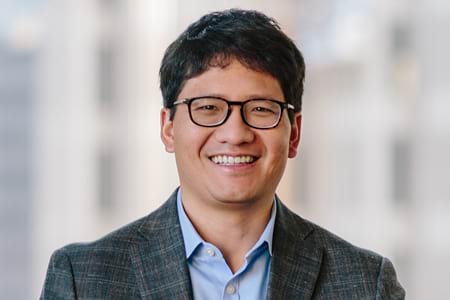

Bryan Wong, CFA
Co-CIO – Small Cap Growth & Portfolio Manager
Bryan Wong, a partner at Osterweis, is a Portfolio Manager for the small cap growth strategy. He is passionate about identifying overlooked opportunities with the potential to deliver strong, sustainable performance, helping clients achieve their long-term investment objectives. Bryan particularly enjoys investing in small companies, where the dynamic nature of the market provides fundamental investors the ability to gain a distinct edge through rigorous research and analysis.
Prior to joining Osterweis Capital Management in 2014, Bryan was a member of the investment team managing the endowment of the David and Lucile Packard Foundation. Before that, he was an Analyst at Wohl Capital Management, a long/short hedge fund.
Bryan graduated from Yale University with a B.A. in Political Science and International Studies with distinction and from the University of California Berkeley, Haas School of Business, with an M.B.A., where he was an Investment Management Fellow. He holds the CFA designation and is a member of the CFA Society of San Francisco. Bryan also serves on the investment committee of the Asian Pacific Fund. Outside of work, he enjoys spending time with family and swimming.
For more information about this strategy, please send us an email or call us at (800) 700-3316.
Related Insights
This commentary contains the current opinions of the authors as of the date above, which are subject to change at any time, are not guaranteed, and should not be considered investment advice. This commentary has been distributed for informational purposes only and is not a recommendation or offer of any particular security, strategy, or investment product. Information contained herein has been obtained from sources believed to be reliable but is not guaranteed.
Performance prior to December 1, 2016 is that of another investment vehicle (the “Predecessor Fund”) before the commencement of the Fund’s operations. The Predecessor Fund was converted into the Fund on November 30, 2016. The Predecessor Fund’s performance shown includes the deduction of the Predecessor Fund’s actual operating expenses. In addition, the Predecessor Fund’s performance shown has been recalculated using the management fee that applies to the Fund, which has the effect of reducing the Predecessor Fund’s performance. The Predecessor Fund was not a registered mutual fund and so was not subject to the same operating expenses or investment and tax restrictions as the Fund. If it had been, the Predecessor Fund’s performance may have been lower.
The Osterweis Funds are available by prospectus only. The Funds’ investment objectives, risks, charges, and expenses must be considered carefully before investing. The summary and statutory prospectuses contain this and other important information about the Funds. You may obtain a summary or statutory prospectus by calling toll free at (866) 236-0050, or by visiting www.osterweis.com/statpro. Please read the prospectus carefully before investing to ensure the Fund is appropriate for your goals and risk tolerance.
Mutual fund investing involves risk. Principal loss is possible. The Osterweis Opportunity Fund may invest in unseasoned companies, which involve additional risks such as abrupt or erratic price movements. The Fund may invest in small and mid-sized companies, which may involve greater volatility than large-sized companies. The Fund may invest in IPOs and unseasoned companies that are in the early stages of their development and may pose more risk compared to more established companies. Higher turnover rates may result in increased transaction costs, which could impact performance. From time to time, the Fund may have concentrated positions in one or more sectors subjecting the Fund to sector emphasis risk. The Fund may invest in foreign and emerging market securities, which involve greater volatility and political, economic and currency risks and differences in accounting methods. These risks may increase for emerging markets.
The Russell 2000 Growth Index (Russell 2000G) is a market-capitalization-weighted index representing the small cap growth segment of U.S. equities. The index does not incur expenses, is not available for investment, and includes the reinvestment of dividends.
The S&P 500 Index is widely regarded as the standard for measuring large cap U.S. stock market performance. The index does not incur expenses, is not available for investment, and includes the reinvestment of dividends.
The Magnificent 7 stocks are Alphabet, Amazon, Apple, Meta Platforms, Microsoft, NVIDIA, and Tesla.
References to specific companies, market sectors, or investment themes herein do not constitute recommendations to buy or sell any particular securities.
There can be no assurance that any specific security, strategy, or product referenced directly or indirectly in this commentary will be profitable in the future or suitable for your financial circumstances. Due to various factors, including changes to market conditions and/or applicable laws, this content may no longer reflect our current advice or opinion. You should not assume any discussion or information contained herein serves as the receipt of, or as a substitute for, personalized investment advice from Osterweis Capital Management.
Complete holdings of all Osterweis mutual funds (“Funds”) are generally available ten business days following quarter end. Holdings and sector allocations may change at any time due to ongoing portfolio management. Fund holdings as of the most recent quarter end are available here: Opportunity Fund Complete Holdings (as of 9/30/2026).
Osterweis Capital Management is the adviser to the Osterweis Funds, which are distributed by Quasar Distributors, LLC. [OCMI-920681-2026-04-17]