What Is Secular Growth and Why Is It Important?
Understanding what drives a business is essential for successful investing. Most companies experience cyclical growth, which means demand for their products rises and falls in line with the economic cycle. But some companies, particularly those that sell innovative, differentiated products, experience secular growth, which means demand increases regardless of the economic environment. In our experience, these companies are better investments than cyclical growers.
As we have written previously, there are three main types of secular growth:
- Replacement Product, Existing Market: This is the most common type of secular growth, and there are countless examples throughout history (e.g., flip phones → smart phones).
- Foundational Technology: These are platforms like the internet, the iOS operating system, and the Cloud, which allow other businesses to build new types of products and services on top of them.
- New Product, New Market: These goods and services are entirely new to the economy, often emerging after a foundational technology is established (e.g., search engines, mobile apps).
How Did We Come Up With Our 2026 List?
This list includes the areas of the economy that we believe are not only the most promising but also the most investible, as they contain established, growing businesses with long runways for organic expansion. Importantly, not all secular trends are investible. Some have very attractive upside, but the companies in the space have not yet gained enough market traction to generate reliable, growing revenue streams (this often happens with complex technologies). Alternately, some trends can be too mature, meaning demand is still strong, but the stocks are already well known and overbought. A separate challenge is that some trends are promising but they are quite narrow – a single company disrupting a niche industry.
We believe each of the five trends below are all well positioned for 2026 and beyond.
Artificial Intelligence
Every once in a while, a secular trend is so obvious that everyone can see it, and that is the case with AI. The technology has so much commercial potential that it has attracted capital on an unprecedented scale – hundreds of billions of dollars have already been invested in the sector. AI is unusual, as it is a combination of all three types of secular growth, which explains why it has exploded so quickly.
- Replacement Product, Existing Market: At their core, large language models (LLMs) such as ChatGPT are essentially more robust versions of traditional search engines. They will answer complex questions directly, whereas Google and Bing simply direct you to a list of websites that they believe will answer your question. (Of course, that is changing as the search engines incorporate AI.)
- Foundational Technology: AI is also a robust technology platform that is already being deployed across the economy. Most LLM providers sell AI agents, which can be utilized to improve efficiency in nearly every type of business.
- New Product, New Market: Needless to say, AI is itself new and unprecedented, and it is also allowing innovative companies to develop products that have never been possible.
Given the size of the opportunity, AI has spawned an entire economic ecosystem that did not previously exist. Most investors know about the spectacular success of Nvidia and the hyperscalers (Microsoft, Google, Amazon, Meta, and Oracle), but there are plenty of under-the-radar, smaller companies that have been benefiting, too.
Our focus is largely on the “pick and shovel” companies involved in the data center buildout. Nvidia supplies most of the processing chips, but data centers are complex entities that require a wide range of infrastructure and hardware, and many of the providers trade in the small cap market. Below, we discuss two of our favorite AI investments.
Case Studies
Lattice Semiconductor (LSCC)
Lattice Semiconductor is the only public pure play semiconductor company that sells chips designed to manage critical data center functions, such as power, security, and sensor processing. Each server rack utilizes over 50 of these chips, called Field Programmable Gate Arrays (FPGAs).
For 2026, Lattice expects its Comms and Compute business to grow 20-40%, reaching 60% of total revenue, driven by higher attach rates, emerging applications, and higher pricing. Longer term, the company aims to be the clear leader in small FPGAs, while expanding its leadership in small and mid-range FPGAs. We believe the company can expand revenues from ~$500 million today to $1.5-$2 billion over the long term and still maintain 40%+ operating margins.
Modine (MOD)
Established in the early 20th century, Modine has a rich history in heating and cooling systems, supplying the radiator for the Ford Model T back in 1925. The company has been able to lean on its extensive experience to create customized HVAC equipment (chillers, cooling distribution units, fan walls) for AI data centers. Modine’s competitors typically use standard HVAC equipment that is less effective and less energy efficient. Major players have taken notice, and in the past two years the company has expanded its customer base from a single hyperscaler to five. It is currently projecting its data center sales to double over the next two years from $1 billion to $2 billion.
Unmanned Aerial Systems (Drones)
Drones are another important secular trend that we believe will benefit many areas of the economy. Most people know they can be used for aerial photography and as weapons of war, but drones have many more commercial applications, including:
- Infrastructure Inspection: Drones can inspect, and in some cases repair large structures such as cell towers, power lines, and bridges, simultaneously reducing the risk of injury to human crews and lowering costs.
- Precision Agriculture: Drones can analyze crop health by collecting data on soil conditions and irrigation levels, identifying nutrient deficiencies, pest infestations, and diseases.
- Search and Rescue Operations: Drones can use advanced imaging technology to scan vast areas quickly and identify heat signatures and other markers of human activity.
They can also help with mapping/surveying, environmental monitoring, law enforcement/public safety, and cargo delivery, and, at some point in the future, electric vertical takeoff and landing vehicles (i.e., eVTOLs, or flying taxis). Some of these applications are new products for new markets, while others are replacement products for existing markets, but we expect demand will continue to increase regardless.
Given their versatility, and the fact that the technology is still relatively new, we believe this trend has a long runway for growth. However, currently most publicly traded U.S. manufacturers build military drones, and thus far no clear winner has emerged, so we are mostly monitoring the space and keeping an eye out for additional opportunities. We do have one drone-related holding.
Case Study
Amprius (AMPX)
Amprius Technologies supplies batteries that are used in all types of drones, so the company should do well if adoption continues to increase, regardless of the specific application. Amprius makes a silicon-based lithium-ion battery that is 25-30% silicon in the anode. This contrasts with most that use graphite and only contain 5-10% silicon. Using more silicon leads to better energy density and thus longer use times before recharging. Essentially, the battery charges faster and can be used twice as long. It is currently deployed in both loitering and recon drones (90% of sales) and the company has several high-profile customers. Furthermore, the product is being validated by the leading eVTOL companies, which is another exciting area for future expansion.
Robotics
Robots used to be the province of science fiction movies, but today they are an integral and rapidly expanding area of the economy. In 2024, the number of robotics installations grew globally by 6%, and it is forecasted to grow 7% annually through 2028. In the U.S., the highest adoption rates are in automotive, electronics, and machinery manufacturing. Robots are also used extensively for shipping and fulfillment, with Amazon estimating it has deployed over a million robots across its operations since 2012. Of course, the field is continuing to evolve, and humanoid robots are the next frontier, particularly as AI becomes more sophisticated.
With respect to our secular growth framework, robots fall into both the replacement and new product categories. Once upon a time, auto factory assembly lines were exclusively staffed with humans. Now, robotic arms do much of that work. Likewise, in medicine, robots are capable of improving upon surgical procedures that humans have historically undertaken manually. They can also provide brand new treatments for conditions that previously had no analog solution, as they can operate in very small, hard-to-access spaces. We have been focusing on health care robotics in our portfolio, though we are actively monitoring the space for other opportunities.
Case Study
PROCEPT BioRobotics (PRCT)
PROCEPT is a surgical robotics company that specializes in urologic treatments. The company has been experiencing strong secular growth thanks to its novel approach to treating benign prostatic hyperplasia (BPH) that is safer and faster than the current standard of care. PROCEPT has developed a robotic arm that is connected to an ultrasonic camera that displays a cross-sectional view of the interior of the prostate, allowing surgeons to identify and remove unwanted tissue in real time. Historically, urologists have performed this surgery manually, using tiny cameras that only show the surface of the prostate, which can lead to imprecise resection. Also, PROCEPT’s approach uses pressurized water (rather than lasers), which reduces nerve damage and recovery time. The company recently released a new AI version of the robot that designs/executes an automated surgical plan that physicians simply need to review/approve. PROCEPT reported annual revenue growth above 40% during the past fiscal quarter and is anticipating gross margins of over 60% for the full calendar year in 2025.
Liquid Biopsies
Liquid biopsies use fluid (typically blood) instead of tissue to diagnose cancer. Scientists have long known that tumor cells shed their DNA into the bloodstream, but until recently the sequencing and prep methods were not sophisticated enough to analyze the data. Thanks to advancements in the field, it is now possible to determine the genomic profile of a tumor cell just by examining a blood sample.
This is a classic case of a replacement product in an existing market, and the benefits are significant. Tissue biopsies are invasive procedures, and for some cancers, particularly lung cancer, not much tissue is available to extract, which further complicates the process. Blood tests, on the other hand, are easy and inexpensive, and the results come back more quickly, too. Not surprisingly, liquid biopsies are strongly preferred by patients, doctors, and insurance companies, which is typical with this type of medical innovation. Moreover, because they are so much easier to administer, doctors are finding innovative ways to utilize them to improve patient care (e.g., screening and monitoring).
Case Study
Guardant Health (GH)
Guardant pioneered the liquid biopsy market in 2014, revolutionizing the therapy selection process. Historically, oncologists would sequence tissue samples to determine the genetic makeup of a cancer and then pair the genomic profile with a drug that targets it. Guardant’s technology allowed the genomic profile to come from a blood test rather than a tissue sample, but the matching process was the same. Today, it is the leader in the therapy selection industry, where we estimate it has around 50% market share.
Recently, it has expanded into monitoring, which tracks the presence of cancer post-surgery and for patients in remission, which is very profitable as it is a long-term treatment. The company is also involved in cancer screening, which has the potential to be the largest liquid biopsy market, but it is also the most difficult as early-stage tumors shed only a small amount of DNA. We remain excited about Guardant as it is the only company with a strong presence in therapy selection, monitoring, and screening.
Fintech
Fintech is a catch-all term describing companies at the intersection of finance and technology. Much like other areas of technology, fintech is constantly evolving, and at any given moment, there can be multiple secular growth trends in progress simultaneously.
One trend that we like right now is called neobanking, which refers to financial institutions that interact with customers exclusively through digital channels. Because they lack physical branches, neobanks are able to operate at lower costs, which allows them to charge less for the services they provide. The concept is simple, but it only became commercially viable once mobile and online technology matured enough to support essential banking services. Neobanks have an immense market opportunity, as traditional banks have backed away from consumer lending in recent years. Moreover, younger consumers tend to dislike large, established financial institutions, so they prefer to work with neobanks.
There are other intriguing secular trends in fintech that we are monitoring, but they do not strike us as particularly investible yet. For example, stablecoins are a newer form of cryptocurrency that are pegged to a real-world currency, such as the U.S. dollar. They function similarly to a money market account, which makes them suitable for both cross-border payments and cross-currency savings. While the potential is vast, none of the companies in the space meet our growth, revenue, or profitability targets yet.
Case Study
Chime (CHYM)
Chime is one of the leading neobanks in the industry, and it is focused on less affluent consumers. The company’s mobile-first, cloud-native infrastructure is highly cost effective, which allows it to offer underbanked populations a wide variety of free banking services, including no overdraft fees, no minimum balances, and no monthly or ATM fees. They also offer payday advances with no interest.
The company generates revenue primarily through its debit card transaction fees, which are paid by merchants rather than customers. Its secondary revenue sources include optional premium services for customers and referral fees from other fintech companies. The company has built strong brand loyalty with its existing users, and it continues to add customers at an impressive rate. In addition, its top line revenue continues to increase above 30% annually, and its profit margins are above 65%. We believe the company can triple its revenue per customer over the next five years, substantially boosting its market capitalization and equity returns.
Final Thoughts
Although we are excited about each of the secular trends described above, they are not the only areas where we expect to find opportunities in the near-to-medium term. As always, we will continue to search across the small cap market, particularly within Technology, Health Care, and Industrials. These sectors have historically been defined by innovation, with disruptive companies finding ways to improve upon the status quo, and that is the essence of secular growth. We are always looking for such businesses, and we will continue to invest in them as long as their fundamentals are attractive.
Featuring


James Callinan, CFA
Co-CIO – Small Cap Growth & Portfolio Manager
Jim Callinan, a partner at Osterweis, is a Portfolio Manager for the small cap growth strategy. Throughout his career he has focused on investing in companies that are early in their growth cycles. This experience has been the foundation of our high conviction, valuation-aware approach to investing in small cap growth companies.
Prior to Osterweis, Jim was the Co-Founder & Chief Investment Officer at RS Investments. He also founded the RS Growth Group LLC in 1996 and managed the RS Emerging Growth Fund from 1996 until 2010. In 1999 Jim was named Morningstar’s Domestic Stock Manager of the Year.*
Jim served as portfolio manager for the Putnam OTC Emerging Growth Fund from 1994 to 1996 and began his career at Putnam Investments as an equity research analyst in 1987. He joined Osterweis in 2016 and brought with him the Emerging Growth Partners, LP, a concentrated small cap growth strategy he founded at RS in 2006.
Jim graduated from Harvard College with a B.A. in Economics, New York University with an M.S. in Accounting, and Harvard Business School with an M.B.A. He holds the CFA designation and is a member of the Weatherbie Capital Advisory Board. Outside of work, Jim enjoys spending time with his family, travelling, and golfing.
*Morningstar Managers of the Year are determined by a combination of qualitative research by Morningstar’s manager research analysts; risk-adjusted medium- to long-term performance track records; and performance in the calendar year.


Matt Unger, CFA
Vice President, Portfolio Manager & Director of Research – Small Cap Growth
Matt Unger, CFA
Vice President, Portfolio Manager & Director of Research – Small Cap Growth
Matt Unger, a partner at Osterweis, is a Portfolio Manager for the small cap growth strategy. He enjoys identifying investments in small cap growth companies, particularly those in the Health Care and Industrials sectors.
Prior to joining Osterweis Capital Management in 2016, Matt was a Research Associate at RS Investments, covering small cap growth companies in the medical technology and industrial sectors. Before graduate school, he worked at Platte River Capital covering the medical device sector.
Matt graduated from Trinity University with a B.S. in Finance, cum laude and Southern Methodist University, Cox School of Business with an M.B.A. He holds the CFA designation. Outside of work, Matt enjoys golfing and traveling.
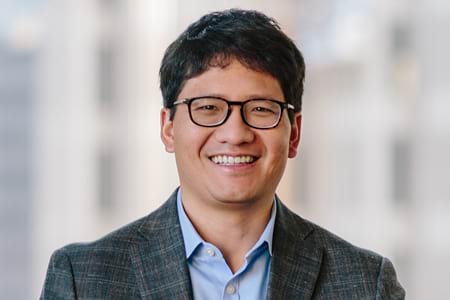

Bryan Wong, CFA
Co-CIO – Small Cap Growth & Portfolio Manager
Bryan Wong, a partner at Osterweis, is a Portfolio Manager for the small cap growth strategy. He is passionate about identifying overlooked opportunities with the potential to deliver strong, sustainable performance, helping clients achieve their long-term investment objectives. Bryan particularly enjoys investing in small companies, where the dynamic nature of the market provides fundamental investors the ability to gain a distinct edge through rigorous research and analysis.
Prior to joining Osterweis Capital Management in 2014, Bryan was a member of the investment team managing the endowment of the David and Lucile Packard Foundation. Before that, he was an Analyst at Wohl Capital Management, a long/short hedge fund.
Bryan graduated from Yale University with a B.A. in Political Science and International Studies with distinction and from the University of California Berkeley, Haas School of Business, with an M.B.A., where he was an Investment Management Fellow. He holds the CFA designation and is a member of the CFA Society of San Francisco. Bryan also serves on the investment committee of the Asian Pacific Fund. Outside of work, he enjoys spending time with family and swimming.


Jamie Wolf, CFA
Research Analyst - Small Cap Growth
Jamie Wolf is a Research Analyst for the small cap growth strategy. In his position he identifies smaller companies with rapid growth potential, particularly in the Consumer and Industrial sectors. He enjoys doing on the ground research to better understand his companies and consumer trends.
Prior to joining Osterweis Capital Management in 2023, Jamie was an Equity Analyst at Invesco LTD covering small, mid, and large cap companies in the Consumer sector. Before that, he worked at Haverford Trust Company as a Senior Research Analyst.
Jamie graduated from Franklin and Marshall College with a B.A. in Chemistry and Economics and UCLA Anderson School of Management with an M.B.A. He holds the CFA designation. He is a member of the LA CFA Society and the American Chemical Society. Outside of his professional life, he enjoys taking care of his dog Zoë.
For more information about this strategy, please send us an email or call us at (800) 700-3316.
Related Insights
Opportunity Fund Quarter-End Performance (as of 9/30/26)
| Fund | 1 MO | QTD | YTD | 1 YR | 3 YR | 5 YR | 10 YR |
INCEP (10/1/2012) |
|---|---|---|---|---|---|---|---|---|
| OSTGX | -4.29% | -8.98% | 18.54% | 22.39% | 17.72% | 3.62% | 14.36% | 13.99% |
| Russell 2000 Growth Index | -5.31% | -9.39% | 10.71% | 12.05% | 17.55% | 4.72% | 9.90% | 10.66% |
Gross/Net expense ratio as of 3/31/26: 1.22% / 1.12%. The Adviser has contractually agreed to waive certain fees through June 30, 2027. The net expense ratio is applicable to investors.
Performance data quoted represent past performance; past performance does not guarantee future results. The investment return and principal value of an investment will fluctuate so that an investor’s shares, when redeemed, may be worth more or less than their original cost. Current performance of the Fund may be higher or lower than the performance quoted. Performance data current to the most recent month end may be obtained by calling shareholder services toll free at (866) 236-0050. Performance prior to December 1, 2016 is that of another investment vehicle (the “Predecessor Fund”) before the commencement of the Fund’s operations. The Predecessor Fund was converted into the Fund on November 30, 2016. The Predecessor Fund’s performance shown includes the deduction of the Predecessor Fund’s actual operating expenses. In addition, the Predecessor Fund’s performance shown has been recalculated using the management fee that applies to the Fund, which has the effect of reducing the Predecessor Fund’s performance. The Predecessor Fund was not a registered mutual fund and so was not subject to the same operating expenses or investment and tax restrictions as the Fund. If it had been, the Predecessor Fund’s performance may have been lower.
Rates of return for periods greater than one year are annualized.
Where applicable, charts illustrating the performance of a hypothetical $10,000 investment made at a Fund’s inception assume the reinvestment of dividends and capital gains, but do not reflect the effect of any applicable sales charge or redemption fees. Such charts do not imply any future performance.
The Russell 2000 Growth Index (Russell 2000G) is a market-capitalization-weighted index representing the small cap growth segment of U.S. equities. This index does not incur expenses and is not available for investment. This index includes reinvestment of dividends and/or interest.
References to specific companies, market sectors, or investment themes herein do not constitute recommendations to buy or sell any particular securities.
There can be no assurance that any specific security, strategy, or product referenced directly or indirectly in this commentary will be profitable in the future or suitable for your financial circumstances. Due to various factors, including changes to market conditions and/or applicable laws, this content may no longer reflect our current advice or opinion. You should not assume any discussion or information contained herein serves as the receipt of, or as a substitute for, personalized investment advice from Osterweis Capital Management.
Complete holdings of all Osterweis mutual funds (“Funds”) are generally available ten business days following quarter end. Holdings and sector allocations may change at any time due to ongoing portfolio management. Fund holdings as of the most recent quarter end are available here: Opportunity Fund
Mutual fund investing involves risk. Principal loss is possible. The Osterweis Opportunity Fund may invest in unseasoned companies, which involve additional risks such as abrupt or erratic price movements. The Fund may invest in small and mid-sized companies, which may involve greater volatility than large-sized companies. The Fund may invest in IPOs and unseasoned companies that are in the early stages of their development and may pose more risk compared to more established companies. Higher turnover rates may result in increased transaction costs, which could impact performance. From time to time, the Fund may have concentrated positions in one or more sectors subjecting the Fund to sector emphasis risk. The Fund may invest in foreign and emerging market securities, which involve greater volatility and political, economic and currency risks and differences in accounting methods. These risks may increase for emerging markets.
The Osterweis Funds are available by prospectus only. The Funds’ investment objectives, risks, charges, and expenses must be considered carefully before investing. The summary and statutory prospectuses contain this and other important information about the Funds. You may obtain a summary or statutory prospectus by calling toll free at (866) 236-0050, or by visiting www.osterweis.com/statpro. Please read the prospectus carefully before investing to ensure the Fund is appropriate for your goals and risk tolerance.
As of 9/30/2025, the Osterweis Opportunity Fund did not own Microsoft, Nvidia, Google, Amazon, Meta, or Oracle.
Osterweis Capital Management is the adviser to the Osterweis Funds, which are distributed by Quasar Distributors, LLC. [OCMI-855534-2025-12-18]